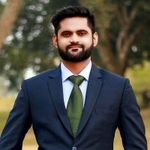
Reeshad Khan
he/him/his
University of Arkansas
Electrical Engineering and Computer Science
Biography
I am a Research Assistant at the University of Arkansas with a passion for pushing the boundaries of 3D perception in autonomous vehicles. Having already earned two Master’s degrees in Computer Science and now pursuing a PhD, my work focuses on Point Cloud–Based 3D Object Detection—a cornerstone of accurate scene understanding and predictive intelligence in self-driving technology. Through my research, I strive to pioneer new methods that enhance reliability and efficiency in autonomous systems. My journey in academia and machine learning reflects both my dedication to forging innovative solutions and my commitment to interdisciplinary collaboration. I believe that transformative progress happens when we merge diverse perspectives, and I actively seek opportunities to exchange ideas with fellow researchers and industry professionals alike. Whether refining algorithms for real-time detection or contributing to open-source projects, I’m motivated by the potential of advanced ML to shape safer, more intelligent transportation solutions. Feel free to connect if you share an interest in AI-driven 3D perception, autonomous vehicles, or collaborative research efforts. I’m always eager to explore new projects, partnerships, and ideas that accelerate our collective strides in this exciting field.
Academic Status
PhD Student - 4th
Research Area/Department
Computer Science; Data Science; Engineering; Machine Learning/AI; other
Major/Specialty
Computer Science (Ph.D. in progress, M.Sc. completed)
Degrees Earned or in Progress
Ph.D. in Computer Science, University of Arkansas (Aug 2021 – Present) M.Sc. in Computer Science, University of Arkansas (May 2024) M.Sc. in Computer Science and Technology, Chang’an University, China (Jul 2021) B.Sc. in Computer Science and Engineering, University of Liberal Arts Bangladesh (Apr 2016)
Academic Preparation
Advanced Artificial Intelligence Machine Learning Deep Learning Computer Vision Image processing Data Mining Optimization and Algorithms Probability and Statistics Operating Systems Software Engineering Data Structures Algorithms
Research/Publications
1. ICCV WDFM Workshop 2025 – TinyBEV: Cross-Modal Knowledge Distillation for Efficient Multi-Task BEV Perception and Planning 2. VISAPP 2025 – From Noise Estimation to Restoration: Unified Diffusion and Bayesian Risk Approach for Unsupervised Denoising 3. IEEE Access – Learning from Oversampling for MRI Reconstruction 4. Additional publications in IEEE Access, arXiv, and GJCST. Research conducted at: •University of Arkansas (CVIU, CIDAR, NCREPT Labs) •NeemSys Lab, Chang’an University
Research/Academic Interests
My research focuses on efficient, scalable AI systems for real-time perception, mapping, and decision-making in autonomous driving. This includes: • Multi-modal sensor fusion (camera, radar, LiDAR) • Panoptic segmentation and 3D reconstruction • Knowledge distillation and model compression for edge deployment • Unsupervised and self-supervised learning for image denoising and restoration • Optimization for high-performance computing and GPU-based distributed training I’m also interested in diffusion models, Bayesian methods, and transformer-based architectures for robust perception in adverse conditions.
Computational and Data Science Areas
Applied Computer Science; Applied Mathematics; Artificial Intelligence and Intelligent Systems; Computer Science; Electrical, Electronic, and Information Engineering; Environmental Engineering; Informatics, Analytics and Information Science; Statistics and Probability; Visualization and Human-Computer Systems
Motivation
I’m applying to Sustainable Research Pathways because it seems to give what I care about most: rigorous AI research and a community that works for betterment of people. As a Ph.D. student in Computer Science at the University of Arkansas, my work centers on efficient, real-time perception for autonomous systems (e.g., TinyBEV, sensor fusion, GPU/distributed training). I’ve seen how inclusive teams produce better scientific solutions - whether mentoring 12 undergraduates in a cybersecurity testbed and AI integration or supporting courses as a Teaching Assistant - and I want to keep continue building in that spirit. Through SRP-NAIRR, I hope to contribute practical strengths - model compression and optimization, robust ML pipelines, and reproducible workflows - to a project where compute and data access matter the most. Equally important, I want to learn from researchers beyond my circle, strengthen my mentorship and collaboration skills, and practice communicating complex ideas and research intuitions clearly to diverse audiences. What I am excited to take away is more than a summer result: a reusable codebase or dataset contribution, a conference-ready presentation, and a network of colleagues I can continue working with after the program. Most of all, I want to help create a welcoming, high-trust environment where everyone is heard, everyone learns, and the science we produce is stronger because of it.