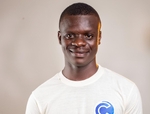
Frank Nambeh
He/Him
Grambling State University
Computer Science
Biography
Frank Nambeh is a Computer Science student at Grambling State University whose research interests focus on artificial intelligence and software engineering. In Summer 2025, he served as a Software Engineering Research Intern at the University of Illinois Urbana-Champaign, where he developed Python-based pipelines to analyze code metrics and improve AI-authenticity detection. His work contributed to building more reliable tools for distinguishing AI-generated code from human-written code and enhancing the efficiency of software benchmarking systems. Beyond his research experience, Frank is passionate about exploring how emerging technologies can be developed ethically to promote transparency, innovation, and accessibility. He currently serves as the Events Coordinator for the Black Male Initiative at Grambling State University, where he helps organize programs that support academic success and leadership among students. Frank hopes to continue pursuing research that bridges artificial intelligence and software engineering to create innovative, inclusive, and impactful technological solutions.
Academic Status
Undergraduate Student - 2nd
Research Area/Department
Computer Science
Major/Specialty
Computer Science
Degrees Earned or in Progress
Bachelors, Computer Science/2028
Academic Preparation
Completed coursework in Computer Architecture, Calculus I, Data Structures and Algorithms, Discrete Structures, Software Systems, Foundations of Cybersecurity, Information Threats and Attacks, and Computer Science I & II.
Research/Academic Interests
I am interested in research at the intersection of artificial intelligence and software engineering, particularly in developing systems that improve the reliability and transparency of AI-generated outputs. My previous research experience at the University of Illinois Urbana-Champaign introduced me to the challenges of AI-authenticity detection and inspired my curiosity about how data-driven models can be made more trustworthy and efficient. I am also drawn to exploring how programming tools, automation, and software optimization can enhance reproducibility in machine learning research. Through future research, I hope to contribute to creating innovative and ethical approaches that strengthen the connection between intelligent systems and human understanding.
Computational and Data Science Areas
Applied Computer Science; Applied Mathematics; Artificial Intelligence and Intelligent Systems; Computer Science; Visualization and Human-Computer Systems
Motivation
I am currently a sophomore computer science major at Grambling State University and actively working on an AI-authenticity detection research project that utilizes software engineering and data analysis techniques. As I progress through my undergraduate career and gain the necessary skills and knowledge through coursework, research, and self-study, I want to focus my studies on exploring how artificial intelligence and software engineering intersect to create reliable, transparent, and reproducible intelligent systems. I am particularly drawn to this area of research because it allows for the development of AI technologies that are both ethical and impactful in real-world applications. My research thus far has involved developing models and pipelines that could be implemented in software to solve real-world challenges. In Summer 2025, I worked as a Software Engineering Research Intern at the University of Illinois Urbana-Champaign, where I built a Python-based pipeline using Pandas, AST, and regex to analyze code metrics and improve AI-authenticity detection. Working with both AI-generated and human-written code datasets challenged me to think critically about model reliability, reproducibility, and fairness. Since this was my first experience in applied AI research at this scale, my contributions focused on building robust data pipelines, preprocessing datasets, and structuring analyses to ensure accurate model evaluation. This experience strengthened my technical skills and gave me a clearer vision of how to combine computational rigor with human-centered considerations in AI systems. In the past two months, my research has focused on AI authenticity detection using Python-based pipelines and data analysis techniques. I have been responsible for developing Python-based pipelines, preprocessing and analyzing datasets, and supporting model evaluation and validation. Although I still have much to learn as a computer scientist and researcher, I now have a more versatile skillset that enables me to tackle these challenges effectively. This quarter, I am taking a machine learning course that will formally provide me with the skills to build, train, test, validate, and deploy my own machine learning algorithms. Recently, I have realized that research and exploring complex topics is something I want to pursue for the rest of my life. I aspire to attain a Ph.D. because, through it, I will be able to conduct research as a career and continually explore exciting avenues of artificial intelligence and its applications in the real world. It is also the first step toward becoming a professor. Yet, it is hard for me to imagine attending an even higher level of education, especially as someone whose parents and grandparents never had the opportunity to go to college. Although I have greatly enjoyed the current scope of my research, I would love to explore different avenues and applications of data science and artificial intelligence in the Sustainable Horizons Institute – SRP program. I am particularly interested in developing models that enhance system transparency, reliability, and fairness. The program’s focus on sustainable, long-term research partnerships and mentorship aligns perfectly with my goals, as I see collaboration as essential not only to my growth as a researcher but also to my development as a future leader in STEM. I am excited to engage with experienced researchers, learn from their guidance, and contribute meaningfully to ongoing projects. The SRP program is also unique in how it provides graduate school preparation to participants. In deciding how I want to spend my summer as a rising junior, the aspect of graduate school preparation is one of the most decisive factors for me. Currently, I dream of entering a Ph.D. program to explore research in AI systems that are robust, ethical, and reproducible. While I have a clear research direction, I have yet to determine how to best present my skills and experiences in graduate school applications. The SRP fellowship offers mentorship, exposure, and academic community that will allow me to authentically portray my capabilities as a student and researcher. As I mentioned earlier, I aspire to become a professor one day. Through teaching and mentorship, I can continue to explore research, make significant contributions to the advancement of AI, and support students on their educational paths as others have done for me. The SRP program will not only allow me to conduct research under excellent guidance but also provide a level of graduate school preparation that I have long sought. It will help me achieve what my parents never had the opportunity to accomplish. Along the way, I hope to serve as a mentor and resource for others, especially for students who lack support in pursuing their educational and research goals.
Lightning Talk Title
Building Trustworthy and Scalable AI Systems for Global Impact
Keywords (Maximum 20 words)
Artificial intelligence; machine learning; trustworthy AI; data engineering; large language models; federated learning; AI for social good; automation; reinforcement learning