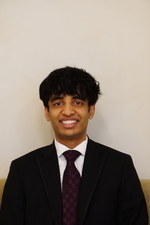
Aditya Mittal
He/Him
University of California, Irvine
Computer Science
Biography
I am an M.S. student in Computer Science at UC Irvine and a recent UC Davis graduate with a B.S. in Statistics. My research interests are in algorithmic fairness, with a focus on the implementation of fairness constraints, their effects on model performance, and how these factors can be optimized to balance ethical considerations with practical effectiveness. At UC Davis, I was advised by Professor Norman Matloff. We developed “towerDebias,” a post-processing method that improves the fairness of black-box classifiers. I also created and maintain “dsld,” an R package for teaching statistics concepts using themes of fair machine learning and discrimination analysis. I have experience writing and presenting academic work. I also have industry experience with two Cisco supply-chain analytics internships, where I created data pipelines and dashboards for cross-functional teams. At UC Irvine, I am enrolled in the thesis based program where I will work on focused research with an advisor. I plan to pursue a PhD in computer science or statistics. I am interested in fairness research, and I am open to exploring new areas of research as well. Long term, I hope to work as an applied research scientist building responsible AI systems.
Academic Status
Masters Student - 1st
Research Area/Department
Applied Mathematics; Computer Science; Data Science; Engineering; Machine Learning/AI; Mathematics; other
Major/Specialty
Major: Computer Science (M.S.) Specialization: Machine Learning/Data Science.
Degrees Earned or in Progress
1. M.S. Computer Science; University of California, Irvine; expected graduation 2027 (In-progress). 2. B.S. Statistics; University of California, Davis; graduated in June 2025. Minors in Computer Science and Mathematics; graduated with Highest Honors; GPA: 3.90.
Academic Preparation
I have taken a range of coursework in statistics, mathematics, and computer science during my undergraduate studies at UC Davis. I have taken the following courses in statistics: Multivariate Statistics: (grade A), Stochastic Processes: (grade A), Statistical learning (supervised/unsupervised): (grade A/A), Bayesian Statistical Inference: (grade A), Probability Theory: (grade A-). I have taken the following courses in Math: Numerical Analysis: (grade A), Linear Algebra: (grade A), Real Analysis: (grade B). I have taken the following courses in computer science: Analysis of Algorithms: (grade A), Data Structures (Python/C): (grade B+/A), Machine Learning/Artificial Intelligence: (grade A/A). At UC Irvine, I will take graduate CS coursework in Data Structures, Algorithms, Distributed Systems, and advanced ML courses in Deep Generative Models and Reinforcement Learning before summer 2026. My coursework provides a strong foundation for advanced research. I also have previous research experience, discussed in the next question.
Research/Publications
My previous research was done at UC Davis during my undergraduate studies. I have worked on several projects: 1. TowerDebias (Fairness in ML): Advised by Professor Norman Matloff. We developed a new post-processing fairness method to reduce bias in black-box classifiers with respect to sensitive attributes such as race, sex, age, etc. I contributed to the theoretical analysis of fairness improvements, and developed experiments to benchmark fairness–accuracy trade-offs across multiple tabular datasets. This project taught me how to carry an end-to-end research project: literature review, implementation, and paper writing. A preprint is available and we are working on a journal submission. Links: Github repository: https://github.com/matloff/towerDebias. Preprint link: https://arxiv.org/abs/2411.08297. 2. Dsld (R/Python package): I developed an R package “dsld: Data Science Looks at Discrimination” with Professor Matloff and several collaborators. I led software design and core functionality for discrimination analysis and fair machine learning applications. For instance, I implemented code to fit linear/logistic models with interactions across sensitive-attribute levels and return factor-wise comparisons of coefficients & predictive performance across groups. We also provide graphical tools for segmented group comparisons and integrated wrappers for fair-ML algorithms. We include a Quarto book to teach key statistical concepts using methods from our package, and I am the project maintainer. This experience taught me how to write software, documentation, and manage long term maintenance. Links: Software (CRAN): https://cran.r-project.org/web/packages/dsld/index.html. Github link: https://github.com/matloff/dsld. Preprint link: https://arxiv.org/abs/2411.04228. Pending journal review. I also presented this software at the Joint Statistical Meetings 2024 conference. 3. LLM + GNN for security datasets: I worked on a summer (2024) project to combine LLM-based relation extraction with GNN link prediction to create a knowledge graph using multiple hardware-security datasets (vulnerabilities, weaknesses, attack patterns). I worked on data cleaning and briefly contributed to the training of the model. I gained hands-on experience with modern deep learning frameworks and GPU programming. I am starting research at UC Irvine on “AI for thermal energy storage systems”. We will use RNNs on time-series temperature data. The project is in early stages so more details will come later.
Research/Academic Interests
My academic interests are in applied statistics and machine learning. My current research centers on algorithmic fairness and understanding the social impact of machine-learning systems. Moving forward, I plan to study how the multivariate structure of high-dimensional datasets (many categorical features, image data, etc.) drives measured disparities among sensitive features. Since variables interact and correlate in practice, these dependencies can change both fairness metrics and bias mitigation strategies. I want to develop and evaluate fairness methods in deep learning settings for complex data modalities such as images, text, and audio. Some potential areas include fair representation learning, learning under distribution shifts in training vs. deployment data, and fairness benchmarking (what does fairness even mean?). I am particularly interested in generative models and their fairness research directions. Beyond fairness, I am interested in causal inference and causal ML for model interpretability. I am very open to adjacent research directions in optimization, probabilistic modeling, information theory etc. to help develop mathematical maturity. These areas can also indirectly inform fairness research, so I hope to gain a broad perspective of the different avenues and strategies in artificial intelligence research.
Computational and Data Science Areas
Applied Computer Science; Applied Mathematics; Computer Science; Other Computer and Information Sciences; Performance Evaluation and Benchmarking; Statistics and Probability; Visualization and Human-Computer Systems
Motivation
My undergraduate research with Dr. Norman Matloff has been challenging yet rewarding. It has taught me to approach problems systematically: read prior work, identify gaps, and build end-to-end projects. This process has also included many setbacks; for example, reviewers recently rejected our towerDebias submission citing unclear motivation. To revise the paper, I am reframing our motivation around established fairness notions and making broader connections to legal requirements we had not previously considered. This iterative process has been a valuable learning experience, allowing me to apply coursework to practical efforts and connect math concepts to real world implications. We plan to resubmit soon with a clearer motivation and fairness framing. These experiences motivated me to pursue graduate study at UCI and explore new research areas with the goal of applying to a PhD program. The Sustainable Research Pathways program provides a unique opportunity to build on my current experience and explore new areas of research. I aim to achieve three main goals: (1) to develop a focused research goal that I can carry into my PhD applications & studies; (2) to gain mentorship and expand my academic network, finding potential advisors; (3) clearer guidance on graduate fellowships and how to position my work more clearly. I want exposure to new ideas and academic environments and to learn proper research methods that will allow me to tackle more advanced projects. I am very interested in socially aware machine-learning applications with a focus on algorithmic fairness, and I am also open to exploring entirely new directions in artificial intelligence research that may be of interest. I hope the NAIRR projects will help clarify my future research directions, and that the summer project will also produce some publishable results! Thank you for considering my application.
Lightning Talk Title
Deep Learning for Fairness and Interpretability
Keywords (Maximum 20 words)
Machine learning fairness; reinforcement learning; natural language processing; deep generative models; applied machine learning; causal inference; data science; optimization.