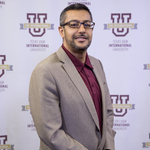
Mustafa Al Lail
Associate Professor
School of Engineering
Texas A&M International University
Biography
I am an Associate Professor of Computer Science and Engineering and an Associate Director of the AI Center at Texas A&M International University (TAMIU), a Hispanic-Serving Institution with a significant population of first-generation, low-income students. In my research, I try to address significant scientific problems that advance knowledge and contribute to improving the quality of our society. While research can be conducted individually, I believe collaboration yields more impactfull results in advancing science. Furthermore, I believe in involving graduate and undergraduate students in my research and have mentored many students, many of whom have become co-authors on publications. I have been recognized as a Distinguished Scholar and a Distinguished Teacher at TAMIU, and I have obtained the IEEE Senior Member status. I participated in the SRP 2023 program and made research contributions with my students, who the DOE eventually hired. The SRP 2023 program also resulted in three grant proposal submissions. Through this SRP program, I aim to expand my collaborations with leading scientists, apply for the NSF NAIRR grant, and prepare the next generation of diverse scholars. I hope this experience will contribute to the future of AI and HPC, and promote my students and my university.
Degrees Earned
1- Bachelor of Science / Computer Engineering / 2004 2- Masters' / Computer Science / 2009 3- Doctor of Philosophy / Computer Science / 2018
Research Areas
Applied Mathematics; Computer Science; Data Science; Engineering; Machine Learning/AI; Mathematics
Research Interests
My research interests include Artificial Intelligence (AI) and Machine Learning (ML), High Performance Computing (HPC), data analytics, cybersecurity, and software engineering. I focus on solving complex real-world challenges in these fields and applying my problem-solving skills in these fields to solve problems at the intersection with other fields. Additionally, I aim to develop robust, scalable software systems for areas such as cybersecurity, high-performance computing, and scientific computation. I have applied AI and ML techniques to address real-world challenges across various domains. In the field of cybersecurity, I developed several ML-based solutions for network intrusion detection and botnet detection that boast a high detection rate and a low false alarm rate. In petroleum engineering, my team and I created an intelligent software tool that uses a hybrid supervised machine learning and deep learning method to predict shale oil production in real-time. This AI-based method is more efficient than conventional, computationally intensive simulations that are used in the petroleum engineering industry. A recent work also includes measuring the intrinsic complexity of datasets and developing methods to detect phishing attempts and other IoT-based security attacks. Recently, my student (Alexis Huante, who is included in this application) and I developed a new supervised ML classifier. I have explored the synergy between AI and HPC. In collaboration with scientists from Oak Ridge National Laboratory, my student and I evaluated the performance of the open-source Llama-2 model for generating HPC kernels. We compared its output to that of OpenAI's Codex model, discovering that Llama-2 produced more optimized code while Copilot generated more reliable code. These projects align with the mission of this program. I also conduct research on software engineering and formal methods to ensure the development of reliable and quality complex software systems. For example, I developed a tool that utilizes formal methods to detect design faults and validate temporal properties in software models. This tool paper was published in the ACM/IEEE International Conference on Software Engineering, the top-most conference in the software engineering field. I believe in supporting students' learning through research activities. Therefore, I directly involve students in my research. Many students have co-authored publications and, as a result of their research experience, have gone on to prestigious graduate programs at various institutions and embarked on careers at top IT companies.
Topical Areas
Applied Computer Science; Applied Mathematics; Artificial Intelligence and Intelligent Systems; Computer Science; Other Computer and Information Sciences; Other Engineering and Technologies; Performance Evaluation and Benchmarking; Statistics and Probability
Research Synergy
My research focus is closely aligned with the SRP-NAIRR projects and HPSF projects. As I described in my research interest section, my primary skills in AI, ML, HPC, data analysis, and software engineering align with the needs of the participating labs and the goals of this program. I have experience that aligns with NAIRR's aim of promoting AI research through collaboration and teamwork efforts. For instance, I have collaborated with Oak Ridge National Laboratory (ORNL) on utilizing generative AI to develop HPC kernels. This experience demonstrates my ability to integrate my team and research into a national lab setting, resulting in a co-authored publication and multiple grant proposal submissions. In addition, I have applied AI in various scientific and engineering fields. This experience allows me to adapt my skills to new projects. For example, I have developed an AI solution for detecting network intrusions and an AI tool for predicting shale oil production in real-time. This diverse experience enables my team and me to tackle interdisciplinary scientific problems addressed by various programs using advanced ML models and data analysis techniques. My experience in software engineering and formal verification enables me to collaborate in developing reliable scientific AI and software systems. My team and I are ready to participate in any projects that require not only advanced AI models but also the application of software practices for developing high-quality, production-level scientific software. In a nutshell, I have successfully collaborated, gained direct experience with HPC and generative AI, and possess a wide range of skills necessary to contribute to various projects. My team and I are prepared to make an immediate technical contribution.
Motivation
The SRP program aims to enhance workforce development among all backgrounds. My primary motivation to participate in the SRP program is personal and directly tied to the community I serve at TAMIU. As a Minority-Serving Institution (MSI), TAMIU serves as a vital lifeline for educational advancement and economic mobility in our region. TAMIU has a student population comprising 89.3% Hispanic students, 76% from low-income backgrounds, and over 51% who are first-generation. The B.S. in Computer Engineering program, launched in the 2020-2021 academic year, has been an enormous success. It has been the fastest-growing program on campus since its launch. Given the community investment in the program, it is incumbent upon faculty members, such as me, to respond. One crucial way to achieve this is to consistently provide students with opportunities to conduct world-class research, which can further prepare them for an increasingly competitive job market. The SRP program and its collaborations with leading institutions are at the forefront of innovation and technology worldwide. There is no better place for students to develop their research skills and prepare for the workplace than at these institutions. Despite some recent improvements in workforce development, significant disparities persist in the STEM workforce. For example, Hispanics comprise just 6.9% of computer scientists in the United States, and the representation of women in this field is even lower. My mission as an educator and researcher is to help close this gap by creating tangible pathways for students, especially women and other underrepresented minorities, to succeed in computer science and engineering. In particular, I aim to do the following: (a) Increase the representation of Hispanics and other minority groups in higher education in Computer Science and Engineering. (b) Maintain collaborative relationships and establish new connections with scientists to conduct outstanding mission-critical research. (c) Apply to more grant proposals, especially the NSF NAIRR grant. (d) Promote the new Computer Engineering program at TAMIU. This will encourage more Hispanics to pursue degrees in Computer Science and engineering, as well as related fields. (e) Help my university, TAMIU, in obtaining the R2 status. (f) Facilitate the smooth transition of Hispanic students to graduate schools, national labs, and the workforce. (g) Write and disseminate research results, and conferences and other scientific venues. My experience in the SRP program during the 2023 summer was transformative for me and my students. It led to collaborations with scientists from Oak Ridge National Laboratory. We successfully established a research agenda that resulted in three grant proposals. I led one of these proposals as the PI, which I submitted to NSF. While these proposals were not funded, they deepened our collaborations and reinforced my commitment to this work. I am excited to continue our research, publish more papers, and build new partnerships. In summary, my motivation is to capitalize on this momentum. I want to increase the representation of Hispanic and other minority students in computing, facilitate their smooth transition to graduate schools and the workforce, and, in doing so, promote the success of TAMIU's new Computer Engineering program. By continuing to create these sustainable connections, we can not only advance cutting-edge research but also cultivate a more diverse, inclusive, and robust scientific workforce for the future.
Supervising Students Plan
High-quality mentoring of undergraduate research assistants will be essential to the success of this application. They will conduct research and work closely with me during the summer research experience. I will be committed to helping the students plan and execute their chosen research projects. I will provide daily guidance and informal feedback to ensure students stay on track. The daily meetings will consist of the following activities: (i) Reviewing the students' achievements and accomplishments towards completing the project. (ii) Discussing challenges and ideas to overcome the research problems. (ii) Establish the following tasks that the students must focus on achieving before the next meeting. The daily group meetings will provide a forum where students can ask questions, and I, as a faculty mentor, can monitor progress. The group members will maintain the group meeting minutes on a shared Google document to keep the team focused on achieving the project goals. The document will outline the goals of the projects, as well as the main accomplishments, challenges, and subsequent tasks discussed during the daily meetings. The team will elaborate on the main accomplishments of the week as progress reports at the end of the week. The progress reports and daily meeting minutes will serve as the basis for scientific publications upon project completion. In addition, I will lead by example and facilitate training in complementary skills essential for success as a computer scientist and engineer, such as communication, writing, management, and ethical behavior. Finally, I will discuss with students the responsible conduct of research, authorship, and other applicable ethical concerns. Since joining TAMIU in the fall of 2018, I have supervised more than 50 undergraduate research projects. I believe in nurturing students' desire to seek knowledge. I have developed my mentoring style by reflecting on my experience as a professor and a mentee. I have also enhanced my style and skills by implementing mentoring best practices from my training and experience. I have practiced and improved my skills through three research Bootcamp experiences at TAMIU and two NSF-funded Research Experiences for Undergraduates (REUs) at Columbus State University. Despite being a new program (the B.S. in Computer Engineering at TAMIU), I have successfully helped more than 15 students secure admissions to graduate schools at the University of Texas at San Antonio and Arizona State University. Additionally, many of my students have secured software development positions at Fortune 500 companies before graduating from our program. A DOE National Lab has hired one of my students who participated in the previous SRP program. The fact that many students in my research groups have developed a significant interest in graduate school due to the work they have done under my supervision demonstrates that my mentorship of them has been successful. Granting my students access to state-of-the-art research facilities and world-class scientists would significantly enhance their interest in conducting research and pursuing graduate studies. Many undergraduate research projects have resulted in conference presentations and journal articles published with students and collaborators. TAMIU has many talented students, despite them coming from an underrepresented group. Our students need more opportunities to apply their knowledge and further develop their research skills. If my team is accepted to participate in the SRP program, more of my current research students will be strong candidates for graduate schools at the best programs in the U.S. The students I include on my team are very interested in graduate school. Securing this opportunity would increase the likelihood that they will persist on the path of scientific discovery and scholarship.
Student Merit
I am including one Hispanic graduate research assistant in this application (Alexis Huante) and another Hispanic undergraduate research assistant (Luis Vela). I have known and worked with these two students for some time in various capacities, allowing me to provide insight into their academic development and character. I have known and worked with Alexis for over four years. I have also known and worked with Luis for more than a year and a half. Both of these students are excellent students who take their responsibilities seriously. They possess the skills and commitment necessary to succeed in this research experience program. They have also demonstrated hard work, a thirst for knowledge, and scientific curiosity. Additionally, they are also punctual and meticulous in their attention to detail. They have never missed a class or a meeting, nor have they arrived late. These qualities have contributed to their learning, resulting in A grade in all the courses they have taken with me. The students' exceptional abilities led me to offer both of them an undergraduate research assistant position to work with me. It is not surprising that they have already demonstrated their excellence by co-authoring several scientific publications. I have enjoyed getting to know and working with these students. Without reservation, of the hundreds of students I have had the opportunity to teach and supervise, these two students are individuals whom I highly recommend. As a team, we are strong candidates for this research experience program for all of the above reasons. I hope you consider our application favorably.
Lightning Talk Title
Building Software and Artificial Intelligence Applications for Solving Scientific Problems
Keywords
Artificial Intelligence; Machine Learning; Scientific Computing; HPC Kernels; Predictive Modeling; Cybersecurity & Access Control; Software Engineering