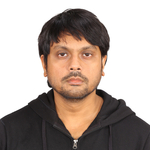
MD KABIR
He/Him/His
Assistant Professor
Computer Science
Philander Smith University
Biography
I am Dr. Md Kabir is an Assistant Professor of Computer Science at Philander Smith University, where I teach courses in Machine Learning, Programming Languages, Applied Computer Science, and Algorithm Analysis & Design. I earned my Ph.D. in Computer Science from the University of Arkansas at Little Rock, where my dissertation focused on developing a robust LSTM-Transformer hybrid deep learning model for financial time-series forecasting. My research spans artificial intelligence, machine learning, health data analytics, and cybersecurity. My publications include peer-reviewed articles and conference papers in Springer and MDPI journals, and my recent work on semantic entity resolution and hybrid neural architectures reflects my commitment to advancing applied AI research. Previously, I served as a System Developer at the Arkansas Department of Health and as an Instructor at the University of Arkansas at Little Rock and the University of Arkansas at Pine Bluff. I have also contributed to federally funded projects supported by the National Science Foundation (NSF) and the U.S. Census Bureau. An active member of IEEE and NVIDIA DLI-certified professional, I am passionate about integrating research, teaching, and technology to solve real-world problems and inspire the next generation of data scientists and engineers.
Degrees Earned
1. Ph.D., Computer Science (2024) – University of Arkansas at Little Rock Dissertation: Unveiling Market Dynamics: Harnessing the Synergy of LSTM and Transformer Models for Enhanced Financial Time Series Forecasting 2. M.Sc., Business Information Systems (2022) – University of Arkansas at Little Rock Thesis: A Cloud-Based Business Intelligence Process Using Integrated Data Analytics for Decision Support 3. M.Sc., Computer Science (2016) – University of Arkansas at Pine Bluff Thesis: Development of a Real-Time Fraud Detection System for Financial Transactions Using Big Data Analytics
Research Areas
Computer Science; Data Science; Machine Learning/AI
Research Interests
Research/Academic Interests My research focuses on advancing machine learning, deep learning, and trustworthy AI through hybrid model architectures and real-world data applications. I develop and evaluate LSTM–Transformer hybrid frameworks for financial forecasting, health informatics, and entity resolution tasks that enhance prediction accuracy and model interpretability. I am actively engaged in NSF- and U.S. Census Bureau–funded research under the Data Analytics that are Robust and Trusted (DART) initiative, focusing on scalable, explainable AI for sensitive data environments. My broader interests include health data analytics, data quality, cybersecurity, and privacy-preserving AI. My work bridges theory and implementation, emphasizing multi-agent AI systems, ethical AI governance, and reproducible data science pipelines. I aim to expand collaborations on federated learning, generative AI, and data governance frameworks that strengthen national data infrastructure and promote responsible innovation.
Topical Areas
Applied Computer Science; Artificial Intelligence and Intelligent Systems; Computer Science
Research Synergy
My research aligns closely with interdisciplinary efforts that integrate artificial intelligence, health informatics, and data governance to address real-world societal challenges. I aim to collaborate with faculty and student teams working on projects involving trustworthy AI, data integration, and predictive analytics across domains such as public health, social science, and economic modeling. Through my work under the NSF and U.S. Census Bureau’s DART initiative, I have developed scalable multi-agent AI systems that enhance data quality, entity resolution, and decision-making transparency. These efforts provide a strong foundation for synergistic partnerships focused on responsible data sharing, explainable machine learning, and AI-driven policy analysis. By combining methodological expertise in deep learning architectures (LSTM–Transformer models) with applied knowledge in health data systems and cybersecurity, I seek to co-develop frameworks and tools that enable collaborative innovation, reproducibility, and ethical data use strengthening the collective impact of cross-disciplinary research teams.
Motivation
I am eager to participate in the Sustainable Research Pathways program because it aligns with my commitment to using artificial intelligence and data science to address meaningful real-world challenges in health, education, and social equity. As a faculty member and researcher, I believe collaboration and mentorship are key to developing responsible and inclusive technology. This program offers a unique opportunity to work with diverse teams and contribute to NSF- and NAIRR-supported research that connects technical innovation with societal impact. I am particularly interested in learning from experienced researchers and exploring how AI can be designed to enhance data quality, transparency, and trust in decision-making systems. Through this experience, I hope to expand my research network, mentor students in cross-disciplinary projects, and strengthen my ability to lead collaborative, grant-supported research in the future. Ultimately, I see this program as a bridge to long-term partnerships that advance both science and community well-being.
Supervising Students Plan
As part of the summer research experience, I will mentor two talented undergraduate students from my Applied Computer Science course at Philander Smith University. Both have consistently demonstrated strong programming, analytical, and research skills, particularly in Python, SQL, and advanced Excel. The students will engage in hands-on machine learning and artificial intelligence tasks, including data preprocessing, model development, and evaluation using real-world datasets. They will work on supervised and unsupervised learning projects such as classification, clustering, and predictive modeling and learn how to implement algorithms using Python libraries like Scikit-Learn, Pandas, and TensorFlow. Additional components will include data visualization, prompt engineering, and basic LLM-based text analysis relevant to ongoing research in data analytics and health informatics. I will conduct weekly research mentoring sessions focusing on literature review, reproducible coding practices, and result interpretation. Each student will maintain a GitHub repository, document progress, and co-author a research poster or paper summarizing outcomes. The experience will strengthen their technical skills, research independence, and academic writing capabilities, preparing them for future graduate studies or data science roles.
Student Merit
Faiza Ola is a Presidential Scholar (4.0 GPA) majoring in Computer Science with advanced proficiency in Python, C++, and data analysis. She has strong interests in machine learning, software development, and data-driven research, as demonstrated by her success in programming projects and leadership as President of the Model United Nations. Chance Bradford is an honors student with a solid foundation in C++, AI concepts, and collaborative software engineering. His leadership roles as Student Council President and Boys Nation representative illustrate his initiative, problem-solving ability, and communication excellence. Both students are deeply motivated to expand their expertise in AI, data science, and applied research, making them outstanding candidates for this mentorship and contribution to NSF-aligned interdisciplinary projects.
Lightning Talk Title
Hybrid Deep Learning for Time Series Forecasting and AI Applications
Keywords
Deep Learning; Machine Learning; LSTM; Transformer; RNN; Data Science; Model Robustness; Sequence Modeling; Applied AI; Financial Prediction; Health Data Analytics