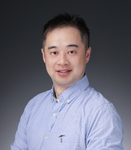
Feng Yu
he/him/his
Assistant Professor
Mathematical Sciences
University of Texas at El Paso
Biography
Dr. Feng Yu is an Assistant Professor of Data Science in the Department of Mathematical Sciences at the University of Texas at El Paso (UTEP). His research interests include high-dimensional statistics, robust statistics, nonconvex optimization, machine learning, and data science. He has developed advanced robust estimators for matrix regression and subspace recovery, with applications in computer vision and cybersecurity, supported by rigorous theoretical guarantees. Dr. Yu earned his Ph.D. in Mathematics from the University of Central Florida (UCF), where he received both the ORC Doctoral Fellowship and the Outstanding Dissertation Award. Before joining UTEP, he held postdoctoral appointments at the University of Minnesota Twin Cities (UMN), Old Dominion University, and the State University of New York at Albany. He is a member of the Institute of Electrical and Electronics Engineers (IEEE) and the Society for Industrial and Applied Mathematics (SIAM). In his free time, he enjoys hiking and watching movies.
Degrees Earned
Ph.D., Mathematics, 2021 M.S., Mathematics, 2018 B.S., Mathematics, 2016 B.E., Economics, 2016
Research Areas
Applied Mathematics; Data Science; Engineering; Machine Learning/AI; Mathematics
Research Interests
Robust statistics, non-convex optimization, security machine learning, big data
Topical Areas
Applied Computer Science; Applied Mathematics; Artificial Intelligence and Intelligent Systems; Computer Science; Other Computer and Information Sciences; Statistics and Probability
Research Synergy
My research interests intersect with the goals of the SRP through their strong emphasis on collaboration, application, and cross-disciplinary impact. Much of my work focuses on high-dimensional statistics, robust estimation, nonconvex optimization, and machine learning, with applications in areas such as computer vision, cybersecurity, and data-driven decision-making. These themes naturally complement the fields of study emphasized by project leaders, as they provide methodological tools and analytical frameworks that can enhance a wide range of ongoing projects. Rather than pursuing isolated research, I aim to align with project leaders’ expertise by contributing mathematical and statistical perspectives that strengthen data analysis, model development, and theoretical guarantees. At the same time, working with faculty/student teams in applied domains will allow me to extend and refine my methodologies in meaningful, real-world contexts. In this way, the collaboration creates a synergy: my research provides rigorous, generalizable tools, while project leaders’ domains offer rich problem settings to ground and validate those tools.
Motivation
The main reasons I want to participate the Sustainable Research Pathways (SRP) program are two folded: (1) As an early-career researcher and professor, I am still in the stage of consolidating my research directions and seeking recognition within the machine learning community. Securing funding from agencies such as NSF and NAIRR is an essential step, and SRP offers an excellent platform to directly engage with NSF-and NAIRR projects. (2) As an applied mathematician and statistician, my research interests include applying machine learning tools to other fields, advancing data science methodologies, and providing rigorous theoretical analysis. I greatly value opportunities to connect with researchers across disciplines, which aligns strongly with the mission of SHI. Hope to get from the SRP program: (1) Engage with NSF and NAIRR projects to gain insight into their research priorities. (2) Expand my professional network and collaborate with researchers across disciplines. (3) Acquire new knowledge and skills over the ten-week SRP program. (4) Experience and enjoy a productive summer in a new environment. (4) Share my research results at conferences and gain feedback from the broader community.
Supervising Students Plan
I plan to supervise the students in the following ways: (1). Regular communication: We will hold weekly meetings to monitor progress, discuss challenges, and brainstorm research ideas. In addition, I will maintain an open-door policy to address questions or engage in discussions outside of scheduled meetings. (2). Encouraging independence and critical thinking: I will prompt students with questions such as, “Do you have new ideas?” or “What if we explore this direction—would it work?” This approach helps them develop independent and critical thinking skills, which are essential for becoming effective researchers, especially early in their training. (3). Constructive feedback: I will regularly review their work, highlighting strengths and suggesting areas for improvement, with a focus on fostering both technical skills and professional growth.
Student Merit
Mr. MD Saifur Rahman Mazumder joined my research team in September 2024 as a first-year Ph.D. student. He came equipped with sophisticated programming skills, which immediately impressed me. In our first collaborative project, Unsupervised Feature Selection via Robust Autoencoder and Adaptive Graph Learning, I assigned him tasks such as implementing the full framework for our proposed method. He quickly grasped the concepts and successfully completed the coding and testing. He was able to carry out all experimental tasks I assigned, including work on both synthetic and real datasets. Another quality I greatly admire in Mr. Mazumder is his aptitude and ability to learn. As a first-year Ph.D. student, his professional writing skills were still developing, which is understandable. However, after several months of training, I have observed significant improvement. In our second project on Bayesian Neural Networks, he has provided insightful and constructive suggestions, demonstrating a level of understanding and contribution that reflects dedication, hard work, and strong intellectual growth. Based on my experience working with Mr. Mazumder, I decide to invite him to join my team for the SRP program, and I am confident that he will both contribute meaningfully and benefit greatly from the program.
Lightning Talk Title
Robust and High-Dimensional Statistical Learning
Keywords
high-dimensional statistics; robust statistics; non-convex optimization; Secure machine learning