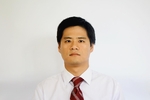
Changqing Cheng
Associate Professor
Systems Science and Industrial Engineering
Binghamton UNiversity
Biography
Dr. Changqing Cheng is an Associate Professor in the School of Systems Science and Industrial Enginering at Binghamton University. His research interest is focused on statistical learning and uncertainty quantification for complex systems, with applications in smart healthcare and resilience design for networked engineering system.
Degrees Earned
Ph.D., Industrial Engineering and Management, Oklahoma State University, Stillwater, OK 2013 M.S., Engineering Mechanics, Dalian University of Technology, China 2007 B.S., Engineering Mechanics, Dalian University of Technology, China 2005
Research Areas
Engineering
Research Interests
Statistical learning, simulation and optimal design for process monitoring, quality control and performance optimization of complex systems, with special interests in nonlinear dynamics and the resulting chaotic patterns, recurrence and self-similarity behaviors
• Power System: nonlinear stability analysis, large-scale network modeling
• Manufacturing: optimal design, uncertainty quantification, sensing data analytics for change / anomaly detection, quality assurance in manufacturing of Electronic Equipment
• Healthcare: data fusion, time series analysis, epidemic modeling
Topical Areas
Health Sciences; Infrastructure and Instrumentation; Statistics and Probability
Research Synergy
My research interests are fundamentally aligned with the mission of Sustainable Research Pathway and NSF National Artificial Intelligence Research Resource Pilot. One recent investigation of our team is the development of Generative Behavior-Augmented Digital Twin to strengthen infrastructure and social resilience against natural disasters, such as flooding. The key is to include human behavior into the AI system for designing the digital replica of the realistic system. This effort not merely overlaps with the core project goals of NAIRR Pilot and SRP, but also actively strengthens the underlying computational architecture and resolves the critical research challenges necessary for the successful deployment of AI. Our work lies at the interfaces of complex system, AI, network science, industrial engineering, providing the fine-grained solutions needed to transition the twin from a conceptual model to a computationally tractable, validated decision-support tool.
Motivation
My participation in the SRP is aimed at enhancing my research and teaching capacity: 1. My current project faces the computational challenge, specifically, running a hybrid simulation of agents and a high-resolution hydrodynamic model faster than real-time. The SRP offers critical access to the NAIRR ecosystem and expertise in distributed computing, which is indispensable for solving this scaling problem and making the digital twin a deployable reality. I seek collaboration with experts to solidify my research, which will lead to top publications and research grant. 2. I plan to translate the advanced computational and modeling practices I could learn at SRP directly back to my home institution. I hope to integrate modules on ethical AI, probabilistic modeling, and digital twin into my course offering SSIE643 Advanced Engineering Analytics, thereby creating a sustainable educational pathway that prepares my students for high-impact, interdisciplinary careers. This course covers the mathematics of advanced AI models for engineering students, and I am actively adding new content to educate myself and the students.
Supervising Students Plan
I have been actively mentoring graduate and undergraduate students at Binghamton University. The SRP program exposes my students to a complex, interdisciplinary research environment. I will mentor the student team under a structured, modular assignment framework. The team will learn the project goal and objectives. They will be assigned task modulars during weekly meetings and will be advised on finishing the tasks on time. As always, they will have also room to navigate and think of the box, which may lead to innovative solutions. Beyond the technical deliverables, I will emphasize the soft skills and career development goals central to the SRP mission, including presentational and writing skills. They will learn how to communicate complex interdisciplinary results to both expert and general audiences, preparing them for conference presentations and future career steps.
Student Merit
Olivia Zhou is an undergraduate student majoring in mathematics at Binghamton University. She started to work with me with a research award from the Provost of Binghamton University in summer 2025. She learned physics-informed deep learning for inverse problems with applications in cardiac digital twin. She is diligent and has the capability of fast learning. I am sure she will succeed in this endeavor.
Lightning Talk Title
Physics-informed Generative Design for Infrastructure Network Resilience
Keywords
Network resilience; Graph learning; Inverse learning; generative design