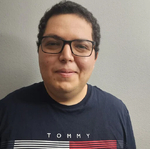
Arturo Rodriguez
Assistant Professor
Department of Mechanical and Industrial Engineering
Texas A&M University
Biography
I am an Assistant Professor in the Department of Mechanical and Industrial Engineering at Texas A&M University at Kingsville. I graduated with a Ph.D. from the Department of Aerospace and Mechanical Engineering at The University of Texas at El Paso, under the guidance of Professor Vinod Kumar where I was an National Science Foundation Graduate Research Fellow (NSF GRFP Fellow), Visiting Researcher at the Computational Mathematics Department at Sandia National Laboratories working with Nathaniel A. Trask, Mauro Perego, Jonas A. Actor, and Anthony Gruber, and Collaborator of the Aerospace Sciences Lab at Purdue University working with Steven P. Schneider. Before this, I was a U.S. Department of Energy National Nuclear Security Administration Graduate Research Fellow (NNSA NGFP Fellow). Previously an AFRL Scholar at AFRL Maui Optical and Supercomputing Site (AMOS), a Collaborator of the CRUNCH Group at Brown University, a Collaborator of Dr. Hamid Johari's Group at CSUN, an R&D intern at the Sandia National Laboratories (SNL) Aerosciences Department, an R&D intern at the Department of Oceanic, Atmospheric and Remote Sciences at the Johns Hopkins University Applied Physics Laboratory (JHU/APL), and an R&D intern in the Department of Fire Science and Technology at SNL.
Degrees Earned
Bachelor of Science/Mechanical Engineering/2020 Master of Science/Mechanical Engineering/2024 Doctor of Philosophy/Mechanical Engineering/2024
Research Areas
Applied Mathematics; Computer Science; Data Science; Engineering; Machine Learning/AI; Physics
Research Interests
My research focuses on advancing the understanding of fluid mechanics, turbulence, hypersonic flow, and boundary layer transition through the synergistic use of computational fluid dynamics, scientific computing, and machine learning. I develop and apply physics-informed methods and physics-guided machine learning to capture nonlinearity, multiscale flow dynamics, and prediction using extreme regime modeling in hypersonic flow. By integrating high-fidelity simulations with data-driven approaches, we aim to establish digital twin frameworks that connect physics, computation, and data, delivering interpretable and real-time predictions of complex flows.
Topical Areas
Applied Computer Science; Applied Mathematics; Atmospheric Sciences; Climate and Global Dynamics; Fluid and Plasma Physics; Hydrology and Water Resources; Mechanical Engineering
Research Synergy
My research focuses on the interface between mechanical engineering, applied mathematics, and applied computer science, integrating fluid mechanics, turbulence, hypersonic flow, and boundary layer transition, where emerging paradigms in science-based machine learning and high-performance computing are being explored. These efforts naturally extend into atmospheric sciences, climate dynamics, and hydrology, as the multiscale principles governing transition and turbulence in aerospace flows lead to large-scale circulation in geophysics, water transport, and environmental variability. By unifying computational physics and data-driven modeling, my work develops digital twin frameworks that transcend disciplinary boundaries, enabling predictive capabilities that inform aerospace applications and Earth system sciences. In this way, my research combines the rigor of mathematics and computation with the complexity of natural and engineering systems, creating a common language across fields that have been studied in silos.
Motivation
The reason I want to participate in the program is that I want to learn from and be known by the entire computational science community. I want to be recognized by the community and form relationships that lead to collaborations, allowing my students and me to learn from the world's best computational scientists. At the same time, I want to have a relationship where they offer computational resources (Perlmutter hours) to my research group. I want the community to support me and get to know me through my work, including publishing articles together, and building a relationship of trust based on my work. I am interested in collaborating with individuals who work in fluids, scientific computing, machine learning, and computational science more broadly. I aim to expand and develop my knowledge in applied mathematics, high-performance computing, and numerical methods theory by collaborating with scientists at Berkeley Lab.
Supervising Students Plan
I plan to oversee student teams focused on structured mentoring, collaborative learning, and independent growth. I will begin by defining a project with our mentors/coworkers, outlining objectives, milestones, and expected outcomes, to ensure that students understand their technical goals and the purpose of their work. I will meet with my team on a weekly basis to guide them, review their progress, and provide assistance if they encounter any issues. I will always support my students in their independent endeavors, while also being there for them when they need guidance. Each student's role will be aligned with their strengths and areas of research in which they want to grow, leading to professional development. I will emphasize the integration of computational tools, scientific reasoning, and effective communication, helping students document their work and present their results in various formats, including mathematical, scientific, written, and oral presentations. My role is to be a guide, not a dictator, ensuring that students learn, collaborate, and develop the confidence to solve complex problems independently.
Student Merit
I have known my two students since June 2025; they are two of my master's students. One works on shock wave simulations and finite differences, and the other on deep learning. They are both always very enthusiastic and eager to learn. Javi (Avinash) meets with me every week and will be publishing his work in my Finite-JAX library, where he simulated the Burgers equation using finite differences in Finite-JAX and without JAX, in the division of fluid dynamics in the American Physical Society. He has already finished the presentation, which is available on ResearchGate. He is extremely hardworking and positive. The other student, Gopi (Gopishwar), is meticulous, enthusiastic, hardworking, and always asks a lot of questions. He ensures that every time we define a theory and its associated mathematics, everything is correct. This includes matrix multiplications, linear systems, and the underlying mathematics, such as activation functions, which create nonlinearities in neural networks. Javi is already working on his thesis and is expected to graduate in December 2026. Gopi is scheduled to graduate in May 2026 and is currently working on the background for his thesis.
Lightning Talk Title
Data-Driven Scientific Discovery using Large Language Models (LLMs)
Keywords
Scientific Computing; Machine Learning; Scientific Machine Learning; Differentiable Programming; High-Performance Computing; Computational Fluid Dynamics; Fluid Mechanics; Heat Transfer